
Campaigns
Discover MTSO’s active and past campaigns advocating for better public transit in Southern Ontario.
Archived
DRT 2024
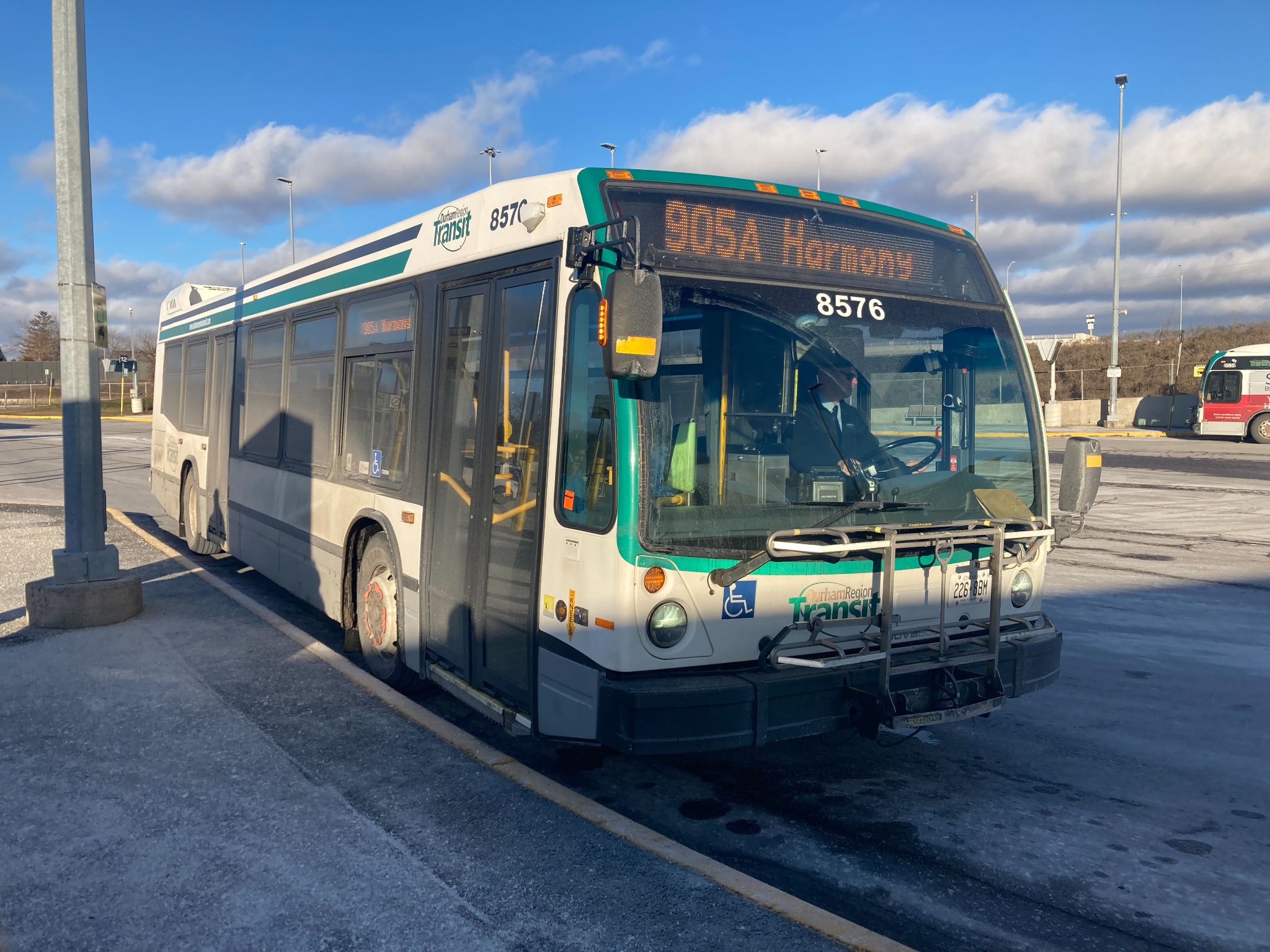
Despite record ridership and inadequate service, Durham Region is proposing to cut $8 million for service increases in their 2024 budget.


Source: Durham Region Transit
In Fall 2023, Durham Region Transit (DRT) saw a massive increase in ridership. In September 2023, ridership was 30% higher than pre-pandemic ridership in September 2019. DRT saw 1.5 million monthly riders and 67,000 daily riders on weekdays. This high ridership has caused many problems. Buses on the busiest routes are constantly full and buses often skip stops because they are full.
To adjust to demand, DRT cut service and redesigned routes on the least busy routes to improve service on the busiest routes due to there not being enough service hours for both services. These service changes took effect at the start of January 2024. In a report released in December 2023, DRT stated that if resources were available, DRT would massively boost service on 15 routes today. This would require 195,000 additional service hours and 41 additional buses.
January 2024 Service
- 8 routes that operate at 15 minute frequencies or better in peak periods
- 2 routes that operate at 10 minute frequencies in peak periods
- 6 routes that operate at 15 minute frequencies or better until 7pm
- 2 routes that operate at 10 minute frequencies until 7pm
- 3 routes that operate at 15 minute frequencies until 7pm on weekends
Proposed Service Increases
- 7 additional routes that operate at 15 minute frequencies or better in peak periods
- 4 additional routes that operate at 10 minute frequencies in peak periods
- 10 additional routes that operate at 15 minute or better frequencies until 7pm
- 3 additional routes that operate at 10 minute frequencies until 7pm
- 5 additional routes that operate at 15 minute or better frequencies until 7pm on weekends
- 1 additional route that operate at 10 minute service on weekends
- 7.5 minute frequencies on route 900 in peak periods
- 5 minute frequencies on route 901 until 7pm

Source: durhamregion.com
In the 2024 Durham Region Budget, over $8 million was planned to increase the budget of DRT. However, due to budget pressures, regional councilors decided to make cuts to DRT in a December 20th meeting. This means that the amount of service hours in 2024 will be the same as 2023.
It means less capacity, longer wait times, more packed buses, more passengers being left behind at stops, no room for ridership growth, and worse transit access. If we care about building more housing efficiently and sustainably, combating climate change, creating opportunities, decreasing road accidents, providing equitable transportation, and reducing traffic. We need to invest in transit.
The demand for more transit in Durham Region is there, we need to invest in it.
Take action against the cuts!
On Thursday, January 11th at 6:30pm:
Durham Region is holding a budget town hall where residents can share feedback and help shape the 2024 budget. You can attend the budget town hall via phone, or emailing budgets@durham.ca. For more information, visit yourvoice.durham.ca/durhambudget.
Here are 5 things you can do to support the $8 million budget increase which is proposed to be cut and advocate for additional funding to fund DRT’s proposed service increases:
- 1. Email your regional councillor
- 2. Attend the Budget Town Hall via phone and livestream
- 3. Email budgets@durham.ca
- 4. Sign our petition (LINK)
- 5. Share this campaign with people!
If you do not reside in Durham Region, you can still participate by emailing a regional councillor in a riding where you work/attend school, email or attend the budget town hall as a transit advocate, sign our petition and share our campaign. Thank you for advocating for better transit!
TEMPLATE:
In Fall 2023, Durham Region Transit (DRT) saw a massive increase in ridership. In September 2023, ridership was 30% higher than pre-pandemic ridership in September 2019. DRT saw 1.5 million monthly riders and 67,000 daily riders on weekdays. This high ridership has caused many problems. Buses on the busiest routes are constantly full and buses often skip stops because they are full.
To adjust to demand, DRT cut service and redesigned routes on the least busy routes to improve service on the busiest routes. Due to there not being enough service hours for both services. These service changes took effect at the start of January 2024. In a report released in December 2023, DRT stated that if resources were available, DRT would massively boost service on 15 routes today. This would require 195,000 additional service hours and 41 additional buses.
January 2024 Service
- 8 routes that operate at 15 minute frequencies or better in peak periods
- 2 routes that operate at 10 minute frequencies in peak periods
- 6 routes that operate at 15 minute frequencies or better until 7pm
- 2 routes that operate at 10 minute frequencies until 7pm
- 3 routes that operate at 15 minute frequencies until 7pm on weekends
Proposed Service Increases
- 7 additional routes that operate at 15 minute frequencies in peak periods
- 4 additional routes that operate at 10 minute frequencies in peak periods
- 10 additional routes that operate at 15 minute frequencies until 7pm
- 3 additional routes that operate at 10 minute frequencies until 7pm
- 5 additional routes that operate at 15 minute frequencies until 7pm on weekends
- 1 additional route that operates at 10 minute service on weekends
- 7.5 minute frequencies on route 900 in peak periods
- 5 minute frequencies on route 901 until 7pm
In the 2024 Durham Region Budget, over $8 million were planned to increase the budget of DRT. However, due to budget pressures, regional councilors decided to make cuts to DRT in a December 20th meeting. This means that the amount of service hours in 2024 will be the same as 2023. Which means less capacity, longer wait times, more packed buses, more passengers being left behind at stops, no room for ridership growth, and worse transit access.
If we care about combating climate change, creating opportunities, decreasing road accidents, providing equitable transportation, and reducing traffic. We need to invest in transit. The demand for more transit in Durham Region is there, we need to invest in it.
I request that Durham Region reinstate the $8 million budget increase for DRT which is now proposed to be cut. As well as further investments so DRT has the resources to implement the 195,000 additional service hours it is proposing. To combat climate change, create opportunities, decrease road accidents, help build efficient and sustainable housing, increase capacity, provide equitable transportation, reduce traffic, and serve existing and future demand,
[YOUR NAME HERE]
Archived
More GO Buses
Transit Action Week 2024
We are advocating for more funding to fill in significant gaps in the regional GO Transit bus network and to see it expand across Southern Ontario to serve new municipalities and locations.
Many municipalities in Ontario have infrequent buses, long travel times and multiple transfers to reach their destinations, or no access to public transit at all.
We are advocating for more funding to fill in significant gaps in the regional GO Transit bus network and to see it expand across Southern Ontario to serve new municipalities and locations.
As some routes are still in the planning phase of Metrolinx’s 2041 Regional Transportation Plan and have not been implemented yet, our networks have had problems when it comes to connecting towns and cities outside the Greater Toronto Area. Many communities that require connections have either lost them or never had them in the first place. That impacts the growth of our municipalities and leads to more commutes, depending on car travel to get around.
Introducing new routes to serve emerging communities would help remove significant barriers to regional connectivity and grow economic development. The following are actionable steps that Metrolinx and municipalities can work together on to ensuregreater transit access in communities across Southern Ontario:
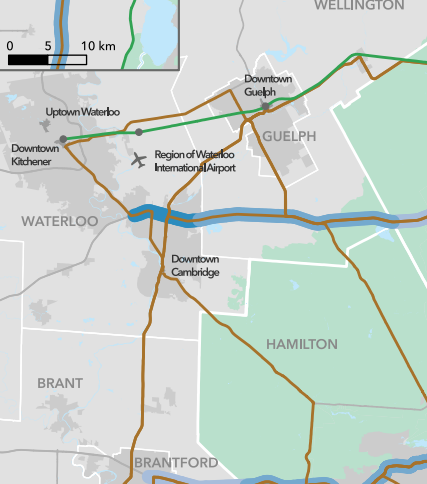
1. Add a direct GO bus service between Cambridge and Guelph along County Road 124.
As of lately, there are no direct trips between Cambridge and Guelph means extra travel time upwards of 1–2 hours. GO buses that do stop in Cambridge are on the outskirts of the town, forcing another local bus connection instead of a one seat ride to destinations within the downtown.

2. Connecting Brantford and Cambridge with GO buses.
Brantford and Cambridge, both key players in Ontario’s regional economy, are underserved by intercity transit. A dedicated GO bus route would provide much-needed mobility for commuters, reduce car dependency, and help bridge the gap between these two communities.

3. Add a Highway 8 connection between Waterloo and Hamilton as soon as new buses arrive.
With increasing demand for travel between Waterloo Region and Hamilton, the time is perfect for the implementation of a direct GO bus route. Delaying this service will continue to strain both regions’ local economies and transit systems. As soon as new buses become available, this route must be established to provide commuters with reliable, environmentally friendly alternatives to driving.

4. Adding more transit connections in Haldimand County to Hamilton.
With increasing demand for travel between Waterloo Region and Hamilton, the time is perfect for the implementation of a direct GO bus route. Delaying this service will continue to strain both regions’ local economies and transit systems. As soon as new buses become available, this route must be established to provide commuters with reliable, environmentally friendly alternatives to driving.
This is an opportunity for Metrolinx to expand the regional Frequent Rapid Transit Network outside the Greater Toronto and Hamilton Area. It involves:
- Improving frequency and span of service.
- Improving reliability.
- Improving first- and last-mile connections to GO Train service.
- Adding new connections.
What can we do?
- Build Public Support: Engage local residents and businesses to demonstrate community demand. MTSO will collaborate with other regional and local advocacy groups to get this work done.
- Lobby Regional Politicians: Gaining the support of elected officials in Guelph and Cambridge can push this project forward. That means contacting your MPP and local representatives in order to get Metrolinx to provide more service.
Email your representatives to show your support of the expansion of new GO bus routes from Guelph to Cambridge and Brantford with Cambridge. Email moretransitso@gmail.com to propose routes we should advocate for, to show your support and to share your experiences.